 |
|


|
|
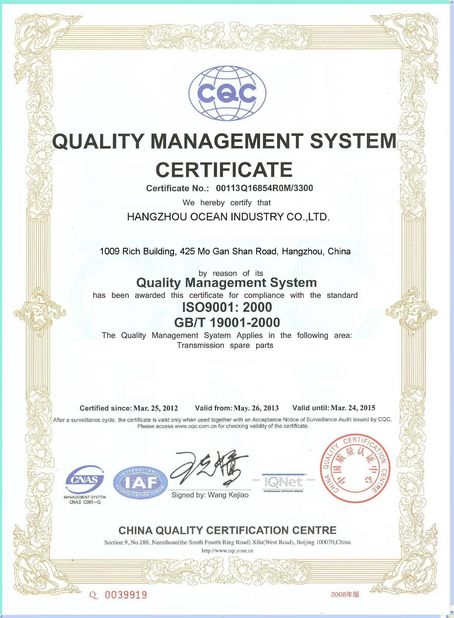
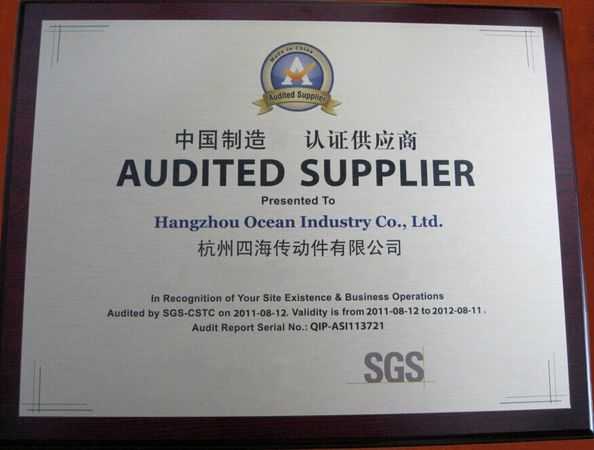
Πιστοποίηση
- Είμαι Online Chat Now
επιχείρηση Ειδήσεις
Common Gear Materials and Heat Treatment Methods (I): Six Basic Requirements for Gear Materials
This article is compiled based on practical experience and public technical resources. Errors may exist due to limited knowledge, and corrections from readers are highly appreciated.
The full content is lengthy, so it is split into three parts. This is Part 1 covering six basic requirements for gear materials.
The core principle of gear selection is not to pick the most expensive material, but to choose the most suitable combination of material and heat treatment for working conditions.
1. Why Gear Material and Heat Treatment Matter
Gears are among the most widely used mechanical components. However, many engineers, especially junior designers, tend to select gear materials casually. They may simply specify quenched and tempered 45# steel or copy existing designs without evaluating operating conditions. Consequently, gears fail prematurely, suffering from pitting on tooth surfaces, tooth root fracture or severe abrasive wear.
Over 80% of gear failures stem from improper selection of materials and heat treatment. Gears operate under harsh service conditions: tooth surfaces sustain cyclic contact stress and frictional wear, while tooth roots bear cyclic bending fatigue stress. They often run at high speed, under heavy load or with shock loads. Hence, the performance requirements for gear materials differ greatly from ordinary structural parts.
A qualified gear needs two key properties simultaneously: hard tooth surfaces for wear resistance and anti-pitting performance, and tough core at tooth roots to resist bending fracture and impact. These two targets seem simple but are hard to achieve at the same time, because hardness and toughness are usually contradictory — higher hardness generally brings lower toughness, and improved toughness often comes at the cost of hardness.
Heat treatment solves this conflict. With proper heat treatment processes, we can achieve differentiated properties: hard tooth surface and tough core. This is the core logic behind gear material selection and heat treatment.
2. Six Basic Requirements for Gear Materials
Before introducing specific materials, we clarify the fundamental requirements. Mastering these rules helps you understand material matching for different working scenarios.
- High contact fatigue strength During meshing, gear tooth surfaces are subjected to alternating contact stress. Insufficient contact fatigue strength causes surface pitting, forming tiny craters. Severe pitting leads to large-area spalling. Pitting is one of the most common failure modes, especially for enclosed gear drives.
- High bending fatigue strength The gear tooth root works like a cantilever beam under alternating bending stress during meshing. Poor bending fatigue strength triggers fatigue cracks at tooth roots and eventually causes tooth breakage. Tooth fracture is the most catastrophic gear failure, which will shut down the whole transmission system.
- Great wear resistance Relative sliding exists between meshing tooth surfaces, with high sliding velocity at addendum and dedendum. Materials with poor wear resistance suffer rapid tooth surface abrasion. This distorts tooth profile, raises noise, reduces transmission efficiency and results in gear scrap in severe cases.
- Sufficient toughness Gears frequently endure shock loads during startup, braking, overload and direction reversal. Materials with inadequate toughness are prone to tooth fracture under impact. Toughness is critical for heavy-load applications with shock.
- Good manufacturability Gear production includes forging, machining and heat treatment. The selected material shall have good forgeability, machinability and heat treatment performance. For example, good hardenability ensures uniform hardening across the section, and low heat-treatment deformation reduces follow-up finishing work.
- Cost-effectiveness On the premise of meeting performance targets, prefer cost-efficient materials to cut expenses. For instance, use 45# carbon steel instead of alloy steel when applicable; choose normalizing rather than quenching & tempering; select induction hardening instead of carburizing quenching where feasible.
These six requirements form the basis of gear material selection. Different working conditions prioritize different indicators. High-speed light-load gears focus on contact fatigue strength and wear resistance. Low-speed heavy-load gears emphasize bending fatigue strength and toughness. Shock-load applications require priority on toughness.
Χρόνος μπαρ : 2026-10-28 10:27:48
>> κατάλογος ειδήσεων
Στοιχεία επικοινωνίας
Hangzhou Ocean Industry Co.,Ltd
Υπεύθυνος Επικοινωνίας: Mrs. Lily Mao
Τηλ.:: 008613588811830
Φαξ: 86-571-88844378